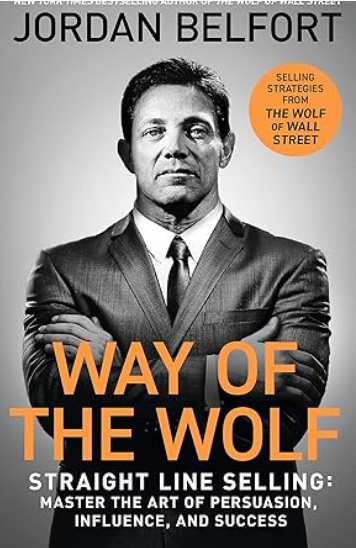
From the beginning of his book, he mentions ‘The Three Tens’ which represents the prospect’s current state of certainty on a scale from 1-10. 10 being at a state of absolute certainty with your product.
The first of the ‘Three Tens’ is your product.
Your prospect must be absolutely certain they like your product.
The second of the ‘Three Tens’ is that they trust you.
Two people can sell the same thing but the person would choose who they trust more even if the sale wasn’t as good as.
Speaking from my own experiences when it came to choosing a reliable web browser, I chose Brave the one my older brother suggested, over the hundreds of ads on Opera. Without many thoughts or research. Later on, I did switch after seeing close friends and famous influencers who are well informed in technology and that sort, once again not on my own research but on who I TRUSTED.
The third of the ‘Three Tens’ is that the prospect must trust and connect with the company.
And if you work for a small company whose reputation is unknown will have little impact with your certainty scale other than the usual skepticism so don’t fret too hard.
The two types of Certainty
Logical Certainty is based primarily on the words you say, does the facts and cases you’ve made to the prospect add up on an intellectual level?
Emotional Certainty is based on gut feeling that something must be good.
It’s essentially future pacing somebody, it’s the very backbone of how we serve someone emotionally. When you future pace somebody you play out a post-buying movie in the best fashion possible after buying your product.
The Straight Line.
This attacks the preconceived notion of the more time you spend talking nonsense with someone about irrelevant things the more rapport you end up building. Jordan witnessed this a lot where some salespeople would spend 30 minutes talking about ducks thinking it built rapport but no. People see through that in 2 seconds flat. Especially rich people. To them it’s actually repulsive.
The straight-line theory is a boundary. It stops you from going to Pluto (talking nonsense with your clients) and Uranus being the prospect talking but too much and they lead and spiral the conversation out of control. You need a balance.
When you use the Straight-Line theory you need to gather intelligence. First, identify their needs any problems they may have
Second their core beliefs such as working over the phone or making quick decisions.
Third, any past experiences they had with the product both good and bad and how they felt.
You must take immediate control of the sale in the first half, engage in massive intelligence gathering while building rapport with your prospect, you must smoothly transition into a straight line presentation.
Another important detail is that it should be quick and easy for the prospect to get the item. Like we do in online shopping if you have apple you just have to double tap your right button and face scan and the purchase went through!
Jordan had also said something that stuck with me which I think a lot of us go through. “Their past did not equal their future, unless they choose to live there.” This can expand much further from sales with your general life. When we experience things our minds play movies of past similar experiences and attribute that to what’s happening now which limits us from moving forwards and creating things.
Essentially, The Five Core Elements of the Straight-Line Theory is:
Prospects must love your product
The prospect must trust and connect with you.
The prospect must trust and connect with your company
Lower the action threshold
Raise the pain threshold
The First Four Seconds
We humans are fear-based creatures. We are constantly judging immediately whether something is safe or not. And so, when our prospect sees us for the first time they make snap quick decisions on who you are.
And the most important things you want in order to be perceived in the right way are:
Sharp as a tack
Enthusiastic as hell
An expert in your field
If you screw up the first four seconds of your encounter you do have another 10 seconds to make up for it. But after that. YOU are completely done. You can’t influence anybody after that point.
This can apply to your work/school life. If you had a negative impression with people in those first 14 seconds let’s say, It’s going to take you eight subsequent positive impressions to redeem yourself.
Make sure you show them you’re worth listening to. When you establish those three things mentioned earlier it makes sense for them to take time out of their busy day.
Get to the point quickly
Not waste the prospects time
Have a solution to their problem
Be an asset to them over the long term
Tonality and Body Language
Your tone of voice and body language says a lot more than words. In human communication:
Tonality = 45%
Body language = 45%
Words = 10%
Words ARE important but 90% of the time we are communicating without actually speaking!
Modulation is a skill we should keep in mind. You want to lower your voice, raise your voice, speed up, and then slow down. You want to make a declarative statement and then turn it into a question.
Have bottled enthusiasm which sits below the surface but bubbles over you as you speak its about enunciating your words with absolute clarity abd stressing your consonants
A way to help carry yourself is carry yourself the way a rich person would because it would lead to the rate state of mind.
When you’re in an empowered state like certainty it can help you access internal resources that set you up for massive success. Likewise, unempowered state you’re blocked from those resources.
Thank you for reading this far! If you enjoyed what you read, I would strongly encourage you to read the book this was collected from the first 100 pages of Jordan Belfort’s book.